
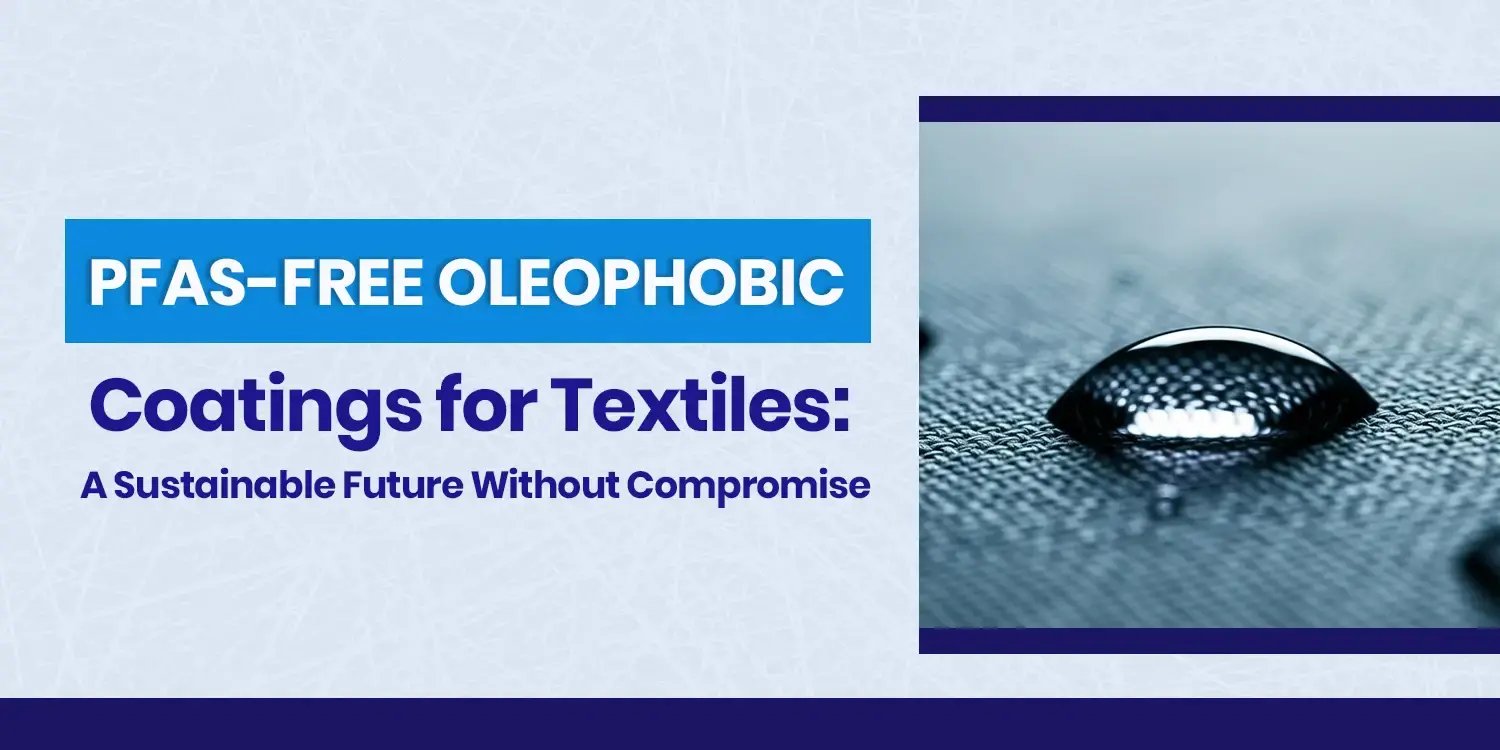
Introduction: Why Oleophobic Coatings Matter
Oleophobic (oil-repellent) coatings are a critical part of modern technical textiles, enabling fabrics to resist stains, repel body oils, improve longevity, and maintain cleanliness in challenging environments. From athletic wear and military uniforms to medical gowns and upholstery, these coatings are relied upon to maintain performance and hygiene.
What’s Used Today and Why?
Most commercial oleophobic coatings rely on per- and polyfluoroalkyl substances (PFAS) specifically, long-chain fluorocarbons like C8 chemistry or, more recently, shorter-chain alternatives (C6, C4). PFAS are prized for their unmatched ability to repel both water and oils, providing stain resistance and easy-clean surfaces without compromising breathability.
Textiles treated with PFAS-based coatings are commonly found in:
- Outdoor apparel and gear (e.g., rain jackets, tents)
- Workwear and uniforms (e.g., firefighting suits, military fatigues)
- Furniture and interior textiles (e.g., stain-resistant upholstery)
- Hospital textiles and disposable gowns
- Sportswear and performance clothing
The Problem: PFAS Under Scrutiny
PFAS are often called “forever chemicals” because of their extreme environmental persistence and potential for bioaccumulation in humans and wildlife. Exposure to certain PFAS compounds has been linked to:
- Hormonal disruption
- Immune system suppression
- Increased cancer risk
- Environmental contamination
Regulatory pressure is intensifying worldwide. The EU has proposed a sweeping ban on over 10,000 PFAS compounds. U.S. states like California and New York have already banned PFAS in many textile applications, and consumer awareness is driving brands toward safer alternatives.
The Industry’s Dilemma
PFAS-free coatings do exist silicones, polyurethanes, dendrimers, wax-based finishes, and plasma treatments have been explored as safer replacements. However, these alternatives often fall short in one or more critical areas:
- Limited oil repellency, often only achieving Grade 0–1 on the AATCC 118 kit test
- Poor durability after washing or abrasion
- Impaired breathability due to thick surface films
- Higher costs and compatibility issues with certain textile types
For many high-performance applications, the industry still need a new PFAS free polymer combined with innovative coating technique
Coating via Electrospinning
One of the most transformative advancements in functional textile finishing isn’t a new chemical it’s a new method of applying coatings.
Electrospinning enables the formation of ultra-thin, conformal coatings that uniformly wrap around each individual fiber in a textile, rather than forming a thick, surface-level film. This fiber-level precision offers key advantages over traditional methods like dip- or spray-coating:
- True conformal coverage: Each fiber is coated for complete performance, without sealing off pores or altering texture.
- Superior breathability: The porous coating structure maintains air and vapor flow critical for comfort and usability.
- Lightweight and flexible: Coatings are barely perceptible, preserving the fabric’s softness and stretch.
- Durable adhesion: Strong electrostatic bonding and fiber entanglement improve wash-fastness and abrasion resistance.
- PFAS-free by design: The process enables the use of sustainable, non-fluorinated polymers with tunable surface properties.
This opens the door to a new generation of PFAS-free oleophobic coatings that offer the performance the industry demands without compromise.
Call to Action
At Matregenix, we are pioneering PFAS-free oleophobic coatings using advanced electrospinning technology achieving promising results in early trials. Our current textile coatings reach Grade 2 oleophobicity on the AATCC 118 test, and we are actively scaling our R&D to push beyond this threshold.
Connect with us to explore partnership opportunities or request samples from our latest development batches.